

.svg)

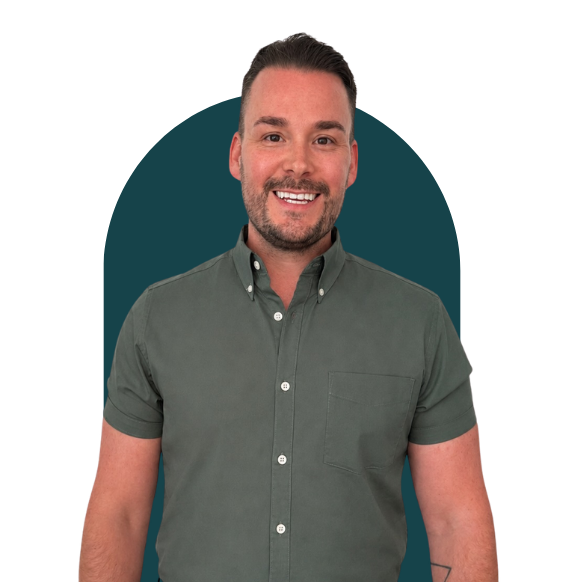
A therapist’s profile can only tell you so much. You get the credentials, the specialties and maybe a hint of personality, but it’s hard to know what someone is actually like to talk to on a Tuesday afternoon when things feel heavy. If you’ve read Kyle’s profile and something in it caught your attention, this is your chance to get to know him a little better.
Kyle Haycock is a Registered Social Worker (RSW) on our team, and he works virtually with adults across Ontario. If a friend told us they were anxious, burnt out and stuck in the same cycles, or that they could be kind to anyone but themselves, Kyle is the therapist we’d recommend. He often uses Internal Family Systems (IFS), which looks at the different parts of you, like the inner critic or the people pleaser, and gets curious about what each one is trying to protect. He also draws on Emotionally Focused Therapy, which explores how your emotions and early relationships shape the way you connect with others today. Through all of it, he pays attention to what’s happening in your body as well as your mind, and he moves at your pace.
Kyle at a glance
- Designation: Registered Social Worker (RSW), Master of Social Work (MSW)
- Works with: Adults in Ontario, virtually
- Often helps with: Anxiety, burnout and stress, self-compassion and the inner critic, childhood and complex trauma, relationship patterns, 2SLGBTQIA+ affirming care
- Sessions start at: $165
Kyle is a member of the Ontario College of Social Workers and Social Service Workers.
Of course, there’s more to Kyle than his training. Below, he shares how he starts every morning, the show he’s rewatching for the second time, the phrase he says most in sessions, and what he wishes every client knew from day one.
Off the clock
What’s a book, show, or documentary that’s stuck with you lately?
Somebody Somewhere on HBO. I’m rewatching it for the 2nd time! It’s a beautiful story about identity, chosen family, belonging and the power of community.
Coffee or tea person? Morning or night person?
Both! I’m certainly a morning person, where you’ll catch me with a coffee (splash of oat milk), and after lunch it’s non-caffeinated tea for me.
If you weren’t a therapist, what would you be doing?
Tough question! I honestly don’t have a straight answer, because I think I’m right where I’m supposed to be. If I had to guess, likely something entrepreneurial to do with cooking/baking. I’m a very passionate home cook.
What’s something small that instantly makes your day better?
A quiet moment outdoors before my day gets going. Whether it’s a walk with my dog or checking on my garden, I start every morning outdoors, coffee in hand, and I absolutely love it.
What sessions with Kyle feel like
What’s a phrase or question you find yourself saying a lot in sessions?
“I’m wondering if it would be okay if we slow this down together, I’m getting a sense that there may be something important here.”
What’s something people usually get wrong about therapy?
You don’t have to share every detail of what happened in order to heal. Therapy can honour your agency and work at a pace and depth that feels safe. There are many ways to tend to the impact of difficult experiences without having to relive them.
How would you describe your vibe as a therapist in 3 words?
Interested, Gentle, Chill.
What does “doing the work” actually look like with you?
Doing the work with me often looks like slowing things down and getting curious about what’s happening beneath the surface: what you’re feeling, the parts of you that are showing up, and the patterns that keep finding their way into your life and relationships.
For the self-aware but still stuck
What kind of person tends to feel most at home working with you?
People who are curious about themselves and maybe already understand a lot about “why” they are the way they are, but find that insight alone hasn’t changed how things feel. They’re ready to gently explore what’s underneath the patterns they keep finding themselves in.
What’s something you wish you could tell every client in their first session?
The patterns or parts of yourself you’re struggling with often developed for a reason. Rather than rushing to get rid of them, I hope we can get curious about what they’ve been trying to do for you, and what they might need now.
What made you want to become a therapist?
I’ve always been deeply curious about people: how we become who we are, how our relationships shape us, and what helps us heal and change. Becoming a therapist felt like a way to turn that curiosity into something meaningful: creating space for people to feel deeply seen, understood, and supported.
As a queer therapist, why does it matter to you to bring that into the room?
My lived experience as a queer person informs how I understand belonging, identity, relationships, and the ways we learn to make ourselves smaller or more acceptable to others. I bring that into the room not because our experiences are necessarily the same, but because I believe there can be real safety in knowing you don’t have to leave parts of yourself at the door.
Ready to meet Kyle?
If you already understand a lot about why you are the way you are, but that insight hasn’t changed how things feel, Kyle can help you take it further. Together, you’ll slow down, get to know the parts of you behind those patterns, and figure out what they need now so they don’t have to work so hard. You don’t need to arrive with your whole story mapped out. A free Meet & Greet is a chance to see what talking with him feels like and to ask whatever’s on your mind.
If you’d like the full rundown on his training and focus areas first, his profile has it all.





 Shift Collab, Toronto, Ontario, Canada